Thrilled to announce that Sentient Hubs has been nominated as a State finalist in the 2022 Australian Water Awards for its 𝗵𝗼𝗹𝗶𝘀𝘁𝗶𝗰 𝗺𝗼𝗱𝗲𝗹𝗹𝗶𝗻𝗴 𝘀𝗼𝗹𝘂𝘁𝗶𝗼𝗻 𝘁𝗼 𝗵𝗲𝗹𝗽 𝗽𝗿𝗼𝘁𝗲𝗰𝘁 𝘄𝗲𝘁𝗹𝗮𝗻𝗱𝘀
Waterborne disease is a leading cause of death and disease around the globe, taking the lives of more than 3.4 million people every year.
One way to tackle this challenge is to better understand the conditions that lead to waterborne pathogens. Due to the complexity of the modelling and the inaccessible nature of many water sources, however, this isn’t always easy.
But one Australian company believes that technology could offer a way forward.
Sentient Hubs is a highly-automated decision support platform deployed on Microsoft Azure that solves complex problems with data insights and forecasting. Recently, its team has developed what experts at the University of Western Australia describe as a first-of-its-kind solution that could provide insights into this critical area of human health.
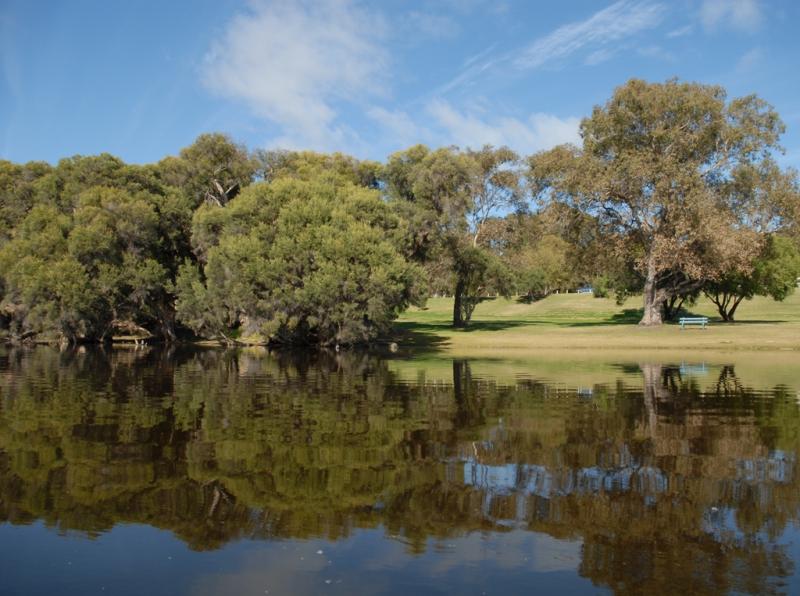
Working closely with the Cities of Joondalup and Wanneroo in WA as part of the Yellagonga Wetlands Smart Sensor Monitoring Program, Sentient Hubs has created a holistic modelling solution in March 2022 to help the councils manage and protect their local wetlands, which are part of Yellagonga Regional Park.
Deploying a range of sensors around the wetlands, the solution measures environmental factors including water levels, nutrient levels, acid sulphate levels, flora health, and triggers for midge outbreaks. It also uses drones, light detection and ranging technology to survey the topography and geography of the wetlands.
“All of that data is linked back to the Sentient Hubs platform as input to configurable model workflows. Contextualised results are then made available to decision makers in near-real time via customisable dashboards, including Microsoft Power BI,” says David Lucido, Managing Director at Sentient Hubs.
“There’s a lot of technical and scientific complexity being automated, which is all transparent, but we’re really making sure we deliver it in a way that’s easy to understand.”
Lucido describes the solution as “a combination of data science, machine learning and ecological simulation”. He notes that the Cities of Joondalup and Wanneroo have been able to predict the abundance of midges while Sentient Hubs continues to train the model.
“It’s an ongoing process that involves machine learning. The more data that is coming in, the more that the model can be trained,” he explains.
“We use user-defined workflows to manage all aspects of modelling including model runs, model chaining (vertical: weather -> water runoff -> hydrology, and horizontal: up-stream -> down-stream) and realistic ‘What if?’ scenarios to stress-test resilience and sustainability.”
Big benefits for two cities
Since deploying Sentient Hubs’ integrated modelling solution, Lucido says “it’s allowed the Cities of Joondalup and Wanneroo to increase public use of the park and deliver community-focused services that make the precinct more sustainable and liveable.”
“The feedback from both cities has been really positive regarding the user experience and the outcomes,” he says.
Joondalup Mayor, Albert Jacob said “the improvements in data collection and analysis allow both cities to make better informed decisions when it came to the management of the park.”
A step towards disease prevention
As well as improving environmental management, Lucido says there is also an opportunity for scientists and governments to use the same type of modelling to understand the preconditions for waterborne diseases such as typhoid fever, cholera and giardia.
“The opportunity is to take the lessons we have learned – and the technologies we have developed and automated – and apply them in areas where the propagation of insects like mosquitoes, for instance, are implicated in waterborne diseases that cause death and suffering, particularly in Southeast Asia and India,” he says.
“We see this as a natural extension of the solution that can be deployed quite quickly and easily.”